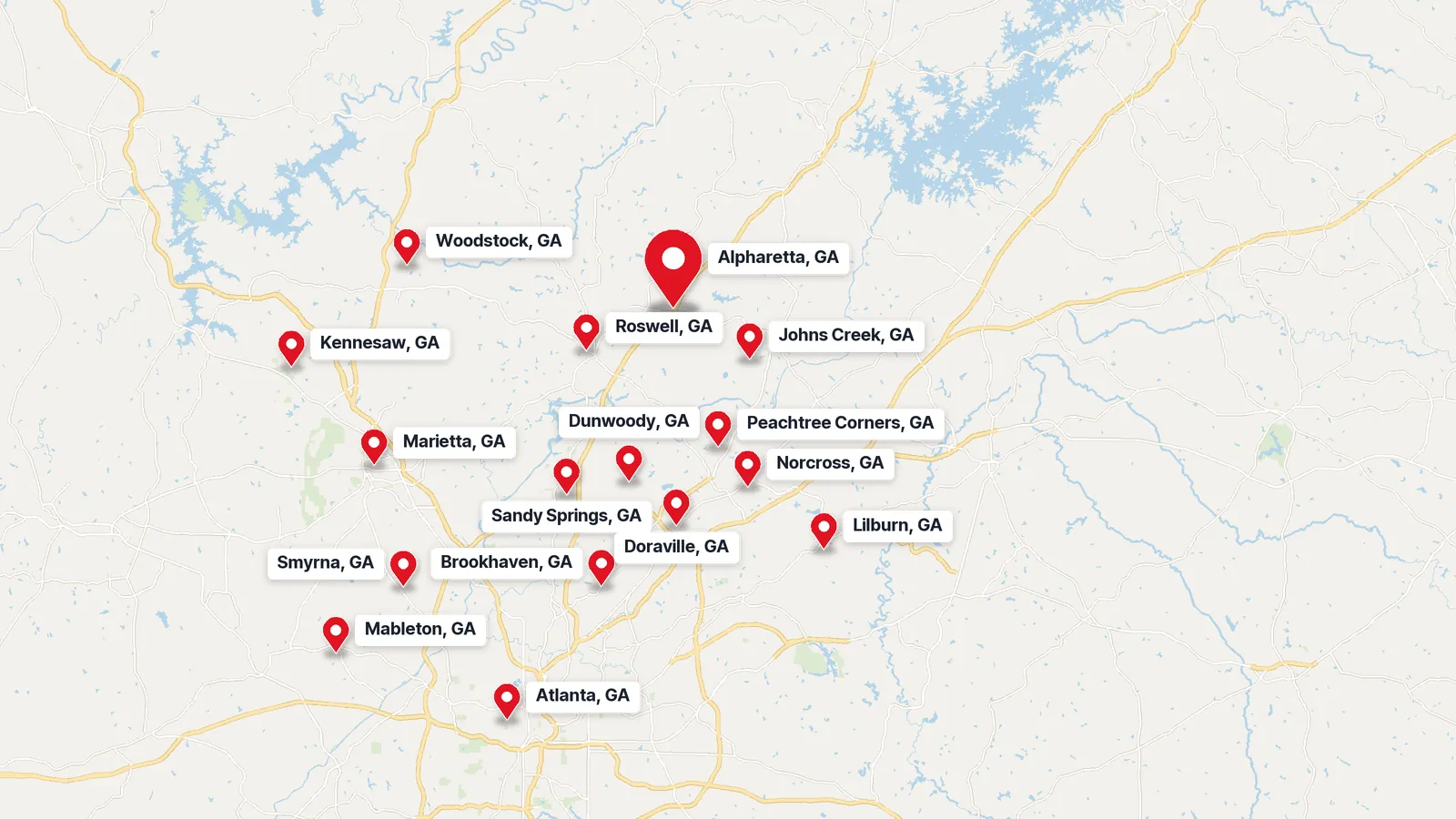
Serving Alpharetta, GA from Woodstock
Mold and Water Damage Help for Alpharetta Homes
Tell us what you're seeing in your Alpharetta home and we'll help you figure out the next step.
How We Help Alpharetta Property Owners
If you've found a musty smell, a stained ceiling or a damp spot you can't explain, we can help you deal with it. Woodstock Mold Remediation handles mold remediation, water damage restoration, dehumidification and structural drying, odor removal and air purification, carpet and flooring replacement, and painting and refinishing. That means one team can take you from the wet or moldy problem to a finished room.
We work out of Woodstock and drive to Alpharetta for jobs in homes, townhomes and rental properties. Because the cause of the moisture matters as much as the mold itself, we look at where the water came from before we talk about cleanup. When you're ready, get your free estimate and tell us your location in Alpharetta so we can plan the visit.
What We Do for Alpharetta Homes
Mold remediation here usually starts with humidity, because Alpharetta's humid subtropical climate and about 51 inches of rain a year keep crawlspaces, basements and attics damp. Water damage restoration and dehumidification and structural drying matter after spring and summer thunderstorms, a leaking roof or a failed supply line. Odor removal and air purification help once the source is fixed, and carpet and flooring replacement and painting and refinishing finish the job so your rooms are usable again.
Where We Work in Alpharetta
We serve homes and buildings across Alpharetta, including these areas and the ZIP codes 30004, 30005, 30009 and 30022.
Downtown Alpharetta
The historic core around Main Street and Milton Avenue mixes older cottages with new townhomes, so moisture problems can differ block by block.
Avalon
A mixed-use district of retail, residential and office space opened in 2014 and built along GA 400, with newer townhomes and condos.
Windward
A large master-planned area around Windward Parkway with corporate offices and upscale homes that often have finished basements and larger layouts.
North Point area
A retail and apartment corridor along North Point Parkway and Haynes Bridge Road, where rental units and shared walls shape how leaks spread.
Webb Bridge and Big Creek Greenway corridor
Mostly subdivisions from the 1990s onward near the greenway, where crawlspaces, basements and roof drainage are common concerns. Learn about the trail through Alpharetta Recreation, Parks & Culture.
Getting to Know Alpharetta
Alpharetta started out as a courthouse town called Milton. It was chartered on December 11, 1858, with boundaries running a half-mile out from the courthouse, and the old Milton County Courthouse stood in front of where City Hall is today. Nobody is sure where the name comes from. It may come from the Greek letter alpha, or from a character in a 19th-century song. You can read more in the Wikipedia article on Alpharetta.
The city sits in northern Fulton County, about 26 miles north of downtown Atlanta, and covers roughly 27 square miles. It grew from a farming crossroads into a technology and finance hub, and you'll see names like ADP, Fiserv and Equifax tied to the area, along with a large data-center presence. Georgia 400 is the main north and south route through town.
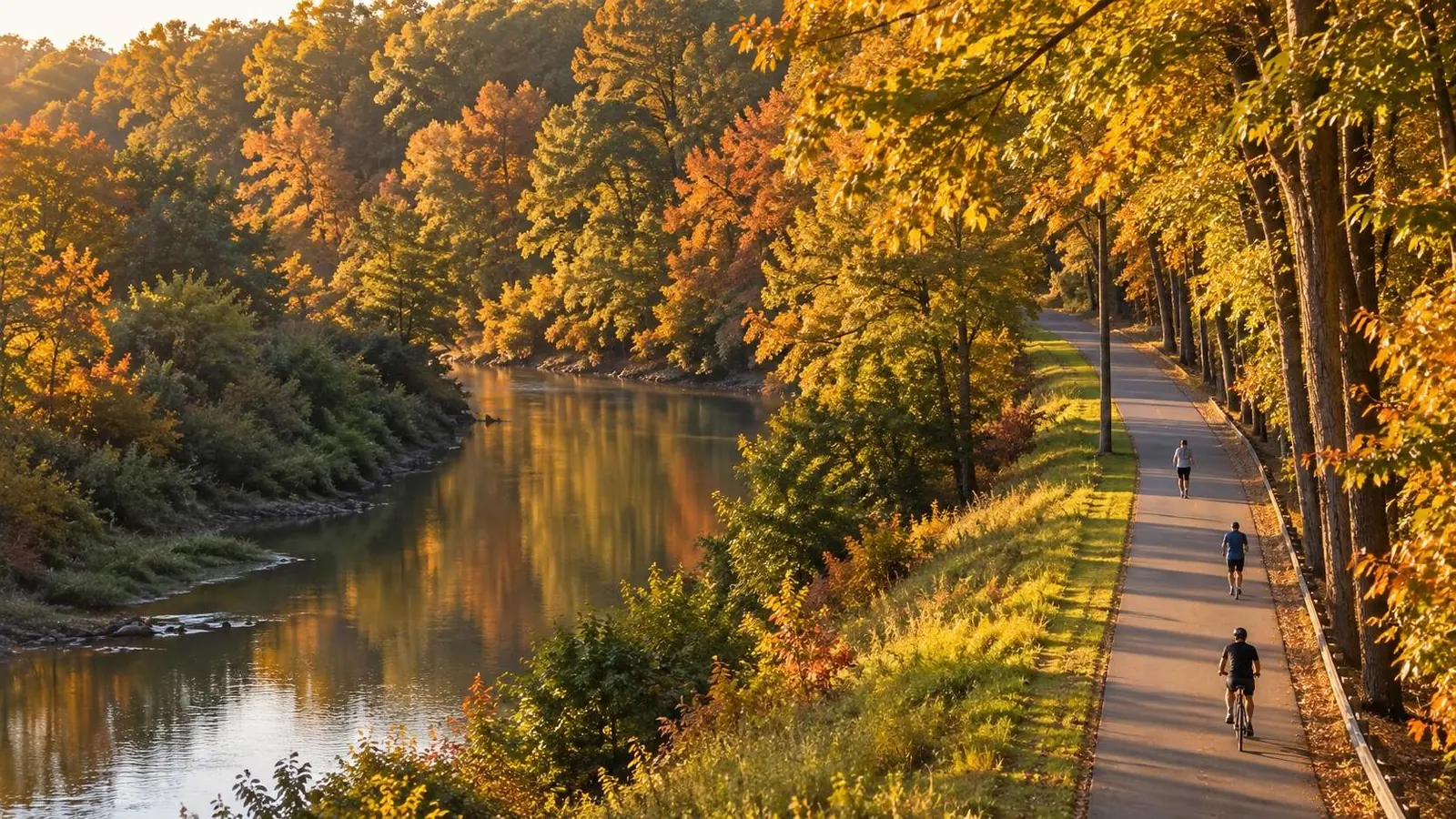
If you've spent time here, you probably know Avalon, the mixed-use district that opened in 2014 along GA 400, and the Ameris Bank Amphitheatre. Many people also walk or bike the 12-mile Big Creek Greenway, which gives the city a stretch of green space inside a very built-up suburb.
Downtown is where the history is easiest to see. The Alpharetta & Old Milton County History Museum has been inside City Hall since 2018, and the city's History Walk covers the Main Street and Milton Avenue area. Around that core you'll find older cottages sitting near new townhomes and restaurants, which is a good picture of how the city has changed.
What to Keep in Mind in Alpharetta
Mixed housing ages change the approach
Alpharetta grew mostly from the 1980s onward, with older homes clustered downtown. Newer townhomes and condos sit in mixed-use areas. Each type hides moisture differently, so we look at how your building is put together before deciding where to open up and dry.
Humid summers and storms drive moisture
Warm, humid summers and frequent spring and summer thunderstorms mean heavy rain, wind and sometimes hail. Roof wear, gutters and drainage can let water in, and damp crawlspaces and basements can follow. Fixing the water source is the first step before any cleanup holds.
Permits go through the City of Alpharetta
The Community Development Department at the City of Alpharetta handles building permits and inspections. Rebuild work with electrical, plumbing, HVAC or structural changes may need them. Check with the city about your specific repair, because Sandy Springs is a separate city with its own permitting.
HOAs and covenants may apply
Many subdivisions have homeowners associations, and some require approval for exterior changes like paint or roofing. Interior mold work is usually less affected, but it varies. Read your covenants before you plan any exterior repair that follows water damage.
Insurance and contractor rules vary
Georgia has no state license for mold remediation, but rebuild work above a dollar threshold falls under contractor licensing. Mold coverage depends on your policy, so read it closely and keep photos and notes. Ask any company about its license and training.
How We Get to Alpharetta From Woodstock
We head out from Woodstock and make our way east and south toward Alpharetta, which is about 14 miles away in a straight line. Most of the trip uses the main roads that connect Cherokee County to northern Fulton County, and we finish on Georgia 400 or one of the big local roads like Old Milton Parkway.
It's roughly a 30 to 40 minute drive depending on traffic, and that can change with rush hour or weather. Once we're in town, we get around using roads such as North Point Parkway, Haynes Bridge Road, Windward Parkway and Georgia 9, which link downtown, Avalon and Windward.
Free Estimates in Alpharetta, GA
Tell us where you are in Alpharetta and what you've noticed, and we'll talk through the best next step with you.
Questions From Alpharetta, GA
Does Georgia require a license to remove mold in Alpharetta?
Georgia does not license mold remediation. Rebuild work like drywall, framing and flooring above a dollar threshold does fall under the State Licensing Board for Residential and General Contractors. Ask any company for its license information and any voluntary training, and ask for a written scope that separates the mold work from the rebuild.
Do I need a permit in Alpharetta to repair after mold or water damage?
Mold removal alone may not need one, but rebuild work with electrical, plumbing, HVAC or structural changes can. The City of Alpharetta's Community Development Department handles permits and inspections, so ask it about your repair before work starts. Sandy Springs has its own permitting, so Alpharetta's process doesn't apply there.
Will my homeowners insurance cover mold from a storm leak?
It depends on your policy. Mold from a sudden covered water loss is often treated differently from long-term seepage, but the wording matters. Read your policy, take photos and keep records. If a claim is mishandled, you can file a complaint with the Georgia Department of Insurance.
Why do Alpharetta homes get moisture problems?
The area has a humid subtropical climate with about 51 inches of rain a year, plus thunderstorms in spring and summer. That can strain roofs, gutters and drainage and leave moisture in crawlspaces and basements. Most of the housing is suburban, built from the 1980s onward, so ventilation and drainage are common things to check.