Mold Remediation in Woodstock, GA
Mold Remediation for Woodstock Homes
Tell us what you're seeing and we'll walk you through what comes next.
What Mold Remediation Really Involves
Mold remediation is a full process, not just a scrub with a spray bottle, and that's what separates it from simple cleaning. It starts with finding out how far the growth goes and where the water is coming from. Then the work area gets sealed off, the contaminated material comes out, and what's left gets cleaned and dried. Because mold spores are everywhere, the goal isn't a home with zero spores. It's a home where nothing is actively growing and the damp that fed it is under control.
Here in Woodstock, the humid summers and plenty of crawl spaces, attics and basements give mold a lot of places to settle in once a leak or poor airflow gets going. Georgia has no state license specific to mold remediation, so it's smart to ask any company about its experience and training. If your job includes rebuilding, such as drywall or framing, you can ask the City of Woodstock Building Department whether permits come into it. If you'd like us to take a look, get your free estimate.
Woodstock Mold Remediation Is Proud to Serve Woodstock
How the Work Is Done Inside the Work Area
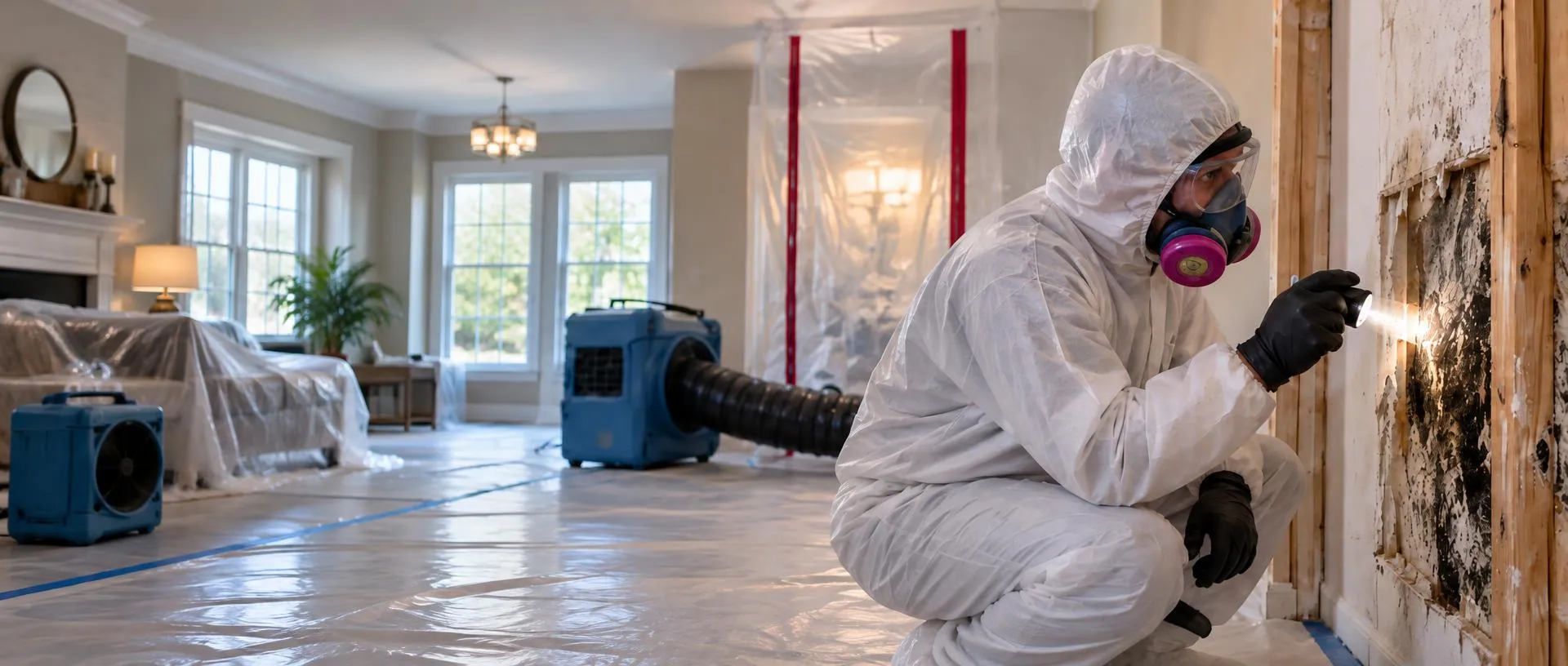
Doing this right means keeping spores from spreading while the mold is disturbed, and that shapes every step. The IICRC S520 standard for mold remediation treats physical removal as the governing principle, not killing mold in place, and it calls for the work zone to be held under negative pressure. Here's how those ideas play out on a typical job.
Containment and negative air
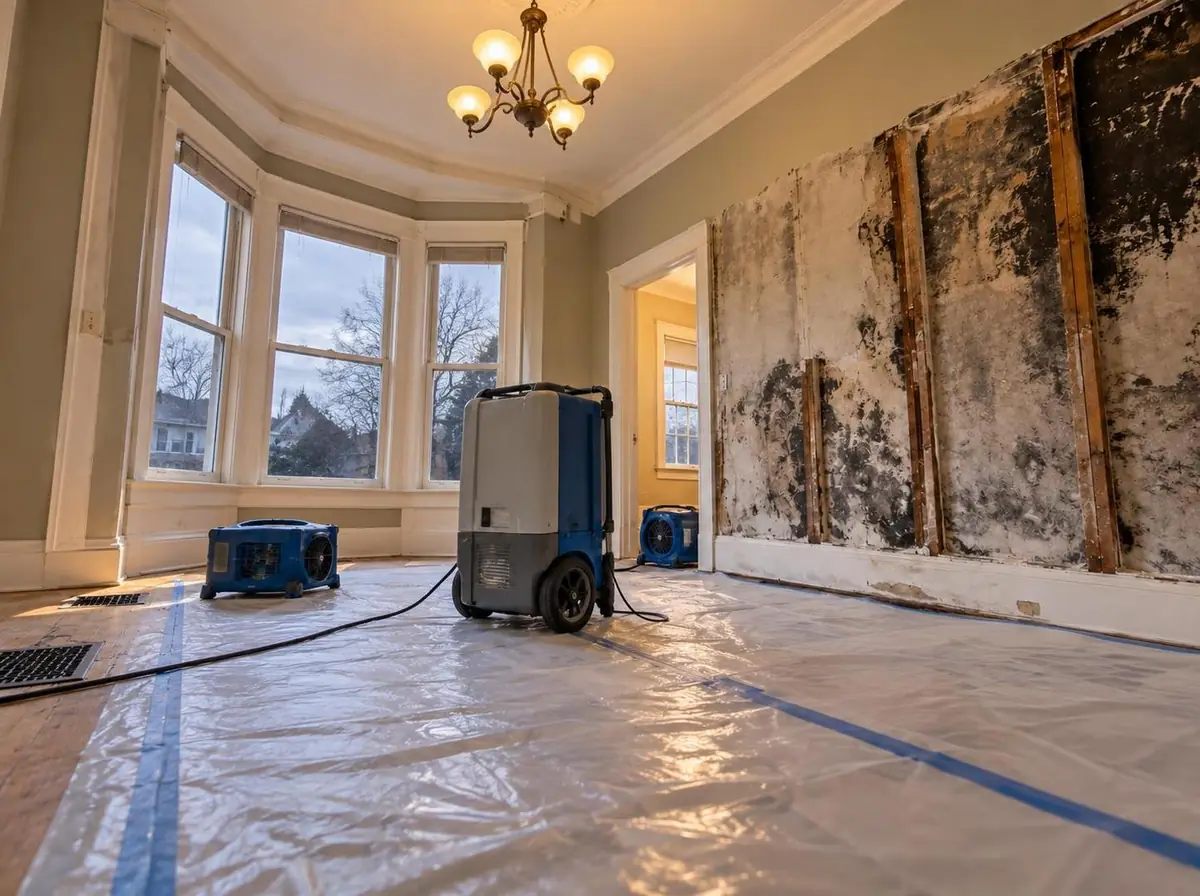
We seal the work area with plastic sheeting from floor to ceiling, with a zip door for entry. A HEPA air scrubber or negative air machine then pulls air out so it flows into the work zone, not out into the rest of your home.
Removing what can't be saved
Porous materials like wet drywall, moldy insulation and soaked carpet padding usually can't be cleaned reliably, so they come out. We bag the debris in heavy plastic inside the containment and carry it out sealed.
Cleaning what can stay
Solid wood framing and other hard surfaces can often be saved. We wire-brush or sand them, then HEPA vacuum and damp wipe so spores are captured, not just moved around. Any antimicrobial goes on afterward, never in place of removal.
Protective gear and safe practice
Anyone removing or cleaning inside the containment wears a respirator, goggles, a hooded disposable coverall, gloves and shoe covers or boots. You stay outside the work area while this is going on.
Typical range (Woodstock, GA)
| Project type | What it typically involves | Typical range (Woodstock, GA) |
|---|---|---|
| Small area, up to 100 sq. ft. | A contained spot such as a bathroom corner, with removal and cleaning of the affected surface | $500 to $1,500 |
| Medium area, 100 to 300 sq. ft. | One or two rooms with containment, removal of damaged material and HEPA cleaning | $1,500 to $3,000 |
| Large job, 300+ sq. ft. | Multiple rooms or hard-to-reach areas, fuller containment and more material removal | $3,000 to $6,000 or more |
| Mold inspection or testing | Assessment of where mold is and, if needed, sampling for lab analysis | About $350 |
These are typical published ranges for the area from home cost guides and local restoration pages, not a quote. The actual price depends on what the inspection finds, such as how hard the area is to reach and whether the HVAC system or rebuilding is involved. See our full cost guide →
How Long the Work Takes and What It Means at Home
How long it takes depends on how much mold there is and where. A small spot may be handled in a day or two, while a room or two often takes several days, and a whole floor or a job involving the HVAC system can run longer. Drying and any rebuilding come after the mold is out, and they add time. We can't promise a number until we've seen the space, but we'll give you a realistic picture once the inspection is done.
For most households, the main effect is that the work area is closed off and you shouldn't go in while removal is under way. You can usually stay in the rest of your home, though there'll be some noise from air machines running through the day, and some activity going in and out. If the HVAC system is involved or someone in your home has asthma or a weakened immune system, we'll talk about whether staying elsewhere for a few days makes sense.
How Other Services Fit In
Mold rarely shows up alone, so the other services on this site often go hand in hand with it. Water Damage Restoration deals with the leak or flood that usually starts the problem, and Dehumidification / structural drying makes sure the building is truly dry before anything gets closed back up. Odor removal / air purification helps clear the lingering musty smell once the source is gone.
When the cleanup takes out drywall, flooring or finished surfaces, Carpet/flooring Replacement and Painting and refinishing bring the room back to normal. Because all of these can be planned together, you get one clear picture of the job instead of juggling several. Tell us what's going on and we'll help you sort out which of them your home actually needs.
What Tells You Mold Is Growing
Mold usually gives you a few hints before it becomes a big job, and most of them are things you can notice yourself.
- A musty, earthy smell that gets stronger when you close a room up or turn on the air conditioning or heat.
- Spots or patches in green, black, brown or white on walls, ceilings, baseboards, window frames or around bathroom fixtures.
- Water stains, bubbling paint or peeling wallpaper, which usually mean moisture is sitting behind the surface.
- Drywall that feels soft, damp or crumbly when you press on it, especially below a leak or near a window.
- Sneezing, coughing, watery eyes or stuffiness that eases when you leave the house and returns when you're back.
- Warped baseboards, buckled flooring or carpet that stays damp after water has been cleaned up.
- Dark staining or a damp smell in the attic, crawl space or around the air handler and vents.
Get Your Free Estimate Today
Send us a quick description of what you've noticed and we'll set up a time to take a look.
Why Choose Us for Mold Remediation?
We find the moisture first
Mold only grows where there's moisture, so we look for the leak, humidity or ventilation problem during the inspection. That way the plan covers the cause and not just the stains you can see.
Containment protects the rest of your home
Sealed barriers and negative air keep disturbed spores from drifting into bedrooms and living areas, which is the part of the job that stops a small problem from becoming a bigger one.
Removal comes before treatment
Spraying over mold leaves dead spores that can still set off allergies. We take out and clean first, and only use an antimicrobial afterward on surfaces that are clean.
Your written scope is clear
You get an explanation of what's coming out, what's staying, how the area will be sealed and what's included, so you can compare estimates line by line and ask questions before work begins.
The job ends with a final check
We walk the area with you after the work to confirm the visible mold is gone and the area is clean. If you want independent clearance testing, we can work around that.
Why Mold Shows Up and Why the Cause Matters
Mold needs moisture, and nearly every case traces back to water in the wrong place. The usual culprits are roof leaks, plumbing leaks, a burst pipe, a clogged condensate line, poor ventilation in bathrooms and kitchens, and water coming in through foundation cracks or poor grading. Humidity matters too, because indoor air that stays above about 50 percent relative humidity makes it easy for mold to take hold. Growth can start within a day or two after a wet event, so how fast the water gets dried makes a real difference.
This is why removing mold without fixing the water source only buys you time. If the leak is still active or the room stays damp, the growth will come back, sometimes within weeks. That's why we look for the source during the inspection and talk with you about what needs repair. A roof patch, a pipe fix, better bathroom ventilation or a dehumidifier may be needed alongside the cleanup so the work you paid for actually lasts.
What Happens After the Work Is Done
Once the cleaning and drying are finished, we do a visual walk-through with you to make sure the visible mold is gone, the area is clean and the containment came down without leaving dust behind. Some owners also hire an independent inspector to take air samples and write a clearance letter. That's a good idea if insurance, a sale or a health concern is involved, because it comes from someone who didn't do the work.
Over the next few weeks, keep an eye on the area. Watch for a returning musty smell, new staining, peeling paint or dampness, and let us know right away if you notice any of it. Returning mold almost always means moisture is still getting in, so the sooner you tell us, the easier it is to track down. Take photos of the area before and after, since they help with insurance and with any future sale.
To keep the problem from coming back, aim to hold indoor humidity between about 30 and 50 percent, run bathroom and kitchen fans during and after use, and fix leaks and gutter problems quickly. If water ever gets into your home again, getting it dried within a day or so makes a big difference. A dehumidifier in a damp basement or crawl space can help, and we can talk about options during the follow-up.
Mold Remediation Questions
Can I stay in my home while the work is being done?
Usually yes, though it depends on the size of the job. With the work area sealed off and negative air running, you can stay in the unaffected parts of the house as long as you keep out of the containment. If the HVAC system is involved, or someone at home has asthma, a weakened immune system or is very young or elderly, we'll talk about staying elsewhere for a few days. We'll decide that with you before anything starts.
Is it safe to clean mold myself?
A very small, dry spot with no water problem behind it can sometimes be cleaned by a careful homeowner. Beyond that, DIY cleaning tends to spread spores, miss growth in the wall and leave the moisture issue untouched. Proper work needs sealed containment, HEPA equipment and the right protective gear. If the area is larger than a patch, keeps coming back, or is near your HVAC system, it's safer to have it assessed.
Do I need mold testing before you start?
Not always. If you can see mold, it needs to be dealt with whether or not a lab confirms it, and the CDC doesn't recommend routine mold testing for that reason. Testing can still be useful for documentation, for an insurance or legal matter, or to compare conditions before and after the work. We'll tell you honestly whether it would help in your case or whether it's money better spent on the cleanup.
Will the mold come back after remediation?
It shouldn't if the moisture that fed it has been fixed. Mold coming back is nearly always a sign that a leak, humidity problem or poor ventilation is still there. That's why we look for the source during the inspection and talk through repairs with you. After the work, keeping humidity down and drying any new water quickly gives you the best chance of keeping it away for good.
Will my homeowners insurance cover it?
It depends on your policy and the cause. Mold that follows a sudden covered water loss, like a burst pipe, is often treated differently from mold caused by a long-term leak or high humidity. Read your policy's mold language and contact your insurer before work starts if you can. Take photos and keep records. If a claim is mishandled, you can file a complaint with the Georgia Department of Insurance.
What happens to the moldy materials that are removed?
They're bagged in heavy plastic inside the work area, sealed and carried out so spores don't spread through your home on the way. Typical removals include wet drywall, moldy insulation and soaked carpet padding, since porous materials are hard to clean reliably. Solid wood framing and hard surfaces are cleaned and kept where possible. We'll tell you in the written scope which items are coming out and which are staying.
How a Job Runs From First Call to Follow-Up
You tell us what you're seeing
You call or send a message about the smell, spots or water event. We ask a few questions about where it is, how long it's been there and whether anyone in the home has breathing concerns.
We inspect and map the moisture
We look at the affected areas and surrounding spaces, use moisture meters and check likely hidden spots like attics, crawl spaces and wall cavities, so the plan matches what's really going on.
We set out the scope and estimate
You get a clear plan covering the containment type, which materials come out, what gets cleaned, how drying will be handled and what rebuilding may follow, so there are no surprises.
We seal off and remove
We set up barriers and negative air, suit up and take out the contaminated materials. Everything is bagged inside the work area and carried out sealed.
We clean and dry
Remaining surfaces get HEPA vacuuming and damp wiping, and drying equipment runs until moisture readings come back to normal. We only treat surfaces once they're clean.
We check the work and follow up
We do a final walk-through with you, look for leftover growth, odor or staining, and go over what to watch for. If you've arranged independent testing, we help with access and timing.