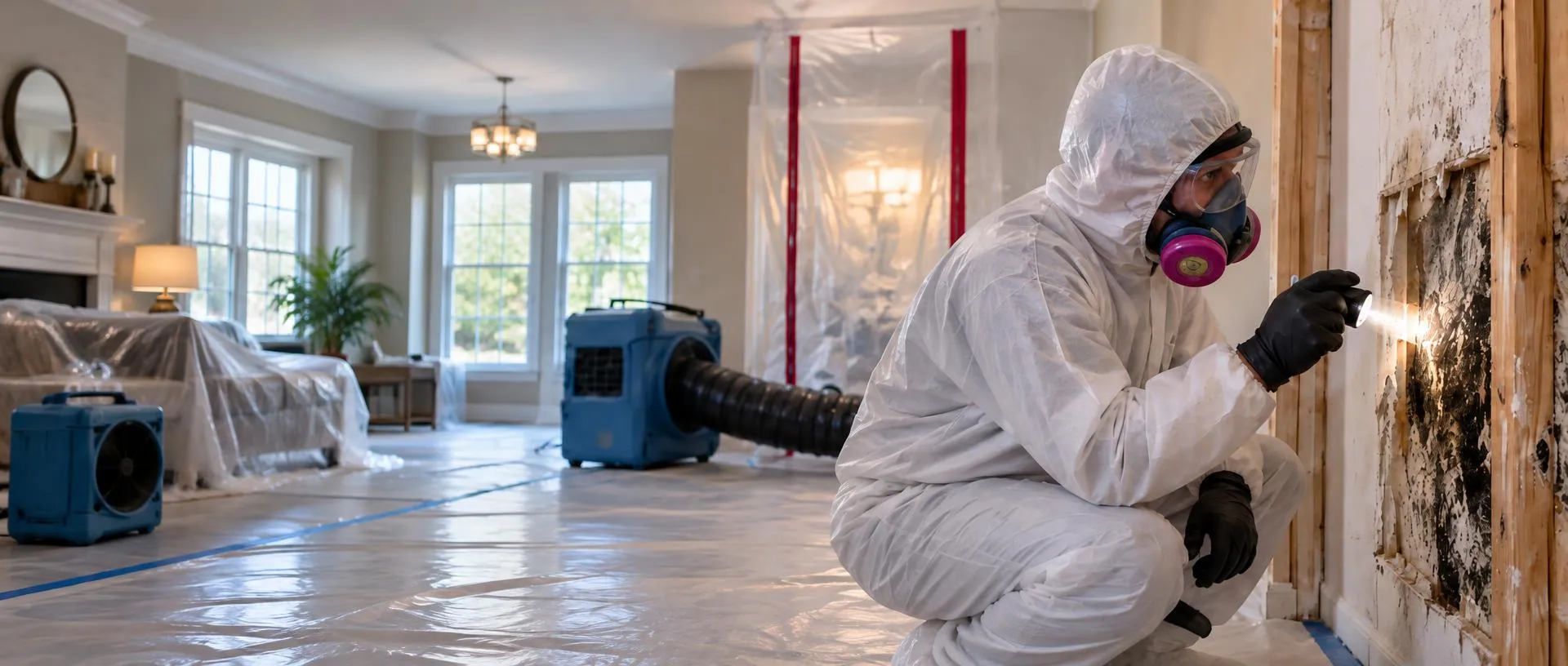
Carpet and Flooring Replacement in Woodstock, GA
Carpet and Flooring Replacement in Woodstock
Tell us what happened to your floors and we'll talk through what it takes to replace them.
How Replacing Your Floors Fits After Water or Mold
When water or mold gets into your floors, replacement is often the safest answer, and it's more than swapping one carpet for another. Carpet and padding soak up moisture like a sponge, so once they've stayed wet past a day or two, or the water wasn't clean, they usually can't be dried or cleaned back to safe. We take out the damaged flooring, look at what's underneath, make sure it's dry, and then put in new flooring that fits your home and how you live in it.
Doing the steps in the right order is what protects your new floor. If the subfloor is still damp or the leak that started the trouble hasn't been fixed, mold can come back under brand new carpet or planks. That's why we treat removal, drying, repair and installation as one connected job instead of separate errands. You'll know what's coming at each stage, and you won't be left wondering whether the floor under your feet is really ready for the next layer.
Woodstock Mold Remediation Is Proud to Serve Woodstock
What Replacing Your Flooring Includes
Replacement covers everything from tearing out the damaged material to finishing the edges of the new floor. Because rebuild work above a certain dollar amount falls under Georgia contractor licensing, you can ask any contractor about licensing and check the State Licensing Board for Residential and General Contractors for how those rules work. Here's what the work covers on your job.
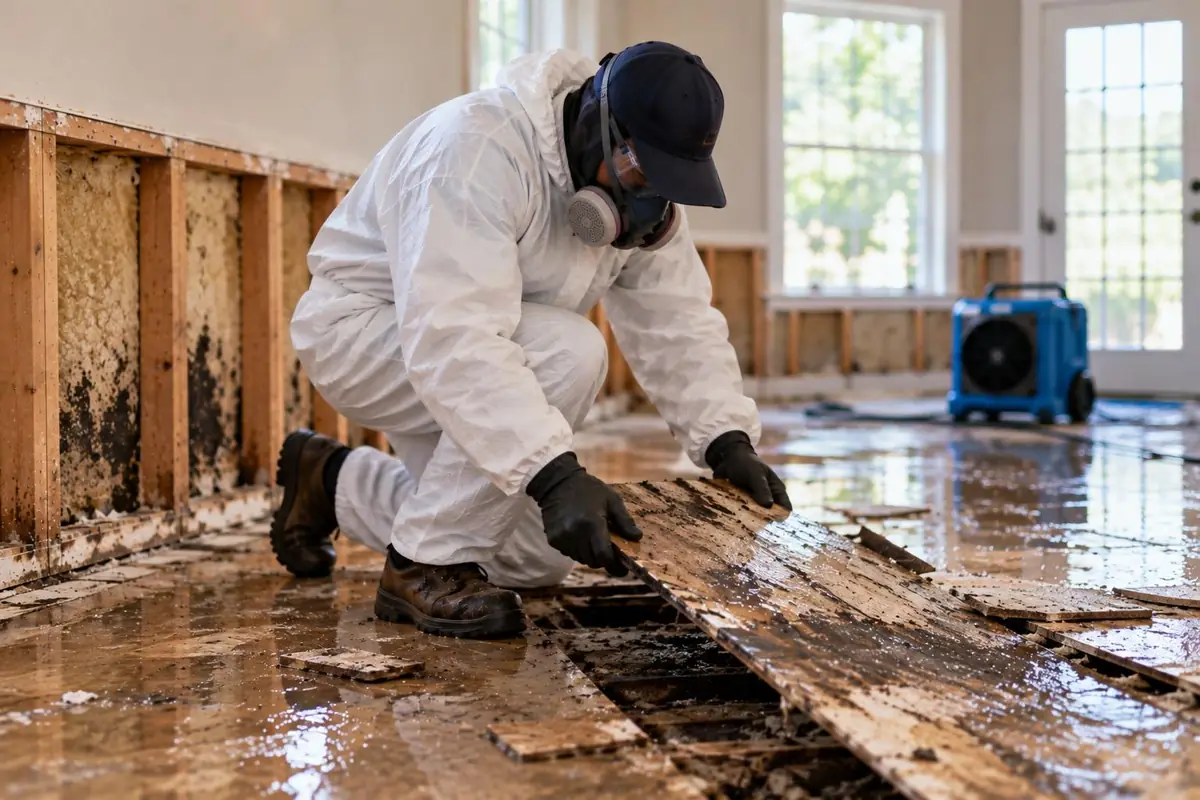
Carpet and Pad Removal
We cut out and haul away water-soaked carpet and padding, bagging it so moldy or contaminated material doesn't get dragged through the rest of your house. Taking it out early also lets the floor underneath start drying instead of staying trapped.
Subfloor Inspection and Repair
Once the flooring is up, we look at the subfloor for moisture, staining, mold and soft or warped spots. Sections that are dried out and solid stay, and boards that are rotted or weakened get replaced so the new floor has something sturdy to rest on.
New Carpet or Hard Flooring
We install new carpet, hardwood, tile, vinyl or laminate, depending on the room and what you prefer. In damp-prone spots like basements, hard surfaces such as tile or vinyl plank dry faster and tend to be less mold-prone than carpet.
Moisture Barriers and Dry Checks
Before anything new goes down, we check that the subfloor is dry with a moisture meter. In basements and other high-risk areas, we can add a moisture barrier over the clean, dry subfloor to cut down on moisture rising into the new flooring.
Trim and Baseboard Replacement
Baseboards and trim often soak up water at the bottom edge and hide mold behind them. We replace damaged pieces and fit new trim after the flooring is in, so the edges of the room look finished and the gaps are sealed up.
Typical Range (Acworth, GA area)
| Project type | What it typically involves | Typical range (Georgia) |
|---|---|---|
| Whole-home carpet replacement (about 1,282 sq. ft.) | Removing old carpet, supplying new carpet and installing it across a typical home's worth of floor. | $3,505 to $4,340 |
| Carpet installed, per sq. ft. | New carpet and the labor to put it in, priced by the square foot. | $3 to $4 |
| Carpet material alone, per sq. ft. | The carpet itself, before labor, removal of the old flooring or any extras. | $2 to $5 |
| Hardwood, vinyl, laminate or tile replacement | Removing damaged hard flooring, checking the subfloor and installing the new material. | Varies by job; ask for an estimate |
These are typical published ranges for the area from home cost guides, not a quote. What you'd actually pay depends on what the inspection finds, such as the flooring you choose and the condition of the subfloor. See our full cost guide →
Signs Your Floors Need Replacing
Floors usually tell you something's wrong before the damage gets serious, and these are the things you can spot yourself.
- Carpet that still feels damp, squishy or cold underfoot days after a leak or flood, even when the surface looks fine.
- A musty smell that gets stronger when you pull back a corner of carpet or walk across one spot in the room.
- Hardwood or laminate planks that cup, buckle, lift at the seams or separate from the floor beneath them.
- Dark spots, staining or fuzzy growth on the back of carpet, the pad, baseboards or the edges of the flooring.
What Usually Damages Flooring in Woodstock Homes
Most floor damage starts with water that stayed where it shouldn't. A burst pipe, a failed water heater, an overflowing washer, a leaking roof or a flooded basement can all soak carpet, pad and the subfloor under them. Georgia's humid weather makes it worse, because damp materials dry slowly and mold can start taking hold within a day or two. Carpet pad holds water longer than the carpet on top, so the surface can feel nearly dry while the layer below stays wet.
Slower problems do the same thing quietly. A dripping fixture, a clogged AC drain line, or a damp crawl space or finished basement can keep a floor wet for weeks without any dramatic event. You might only notice a smell or a soft spot. The kind of water matters too, since gray or dirty water carries contamination that makes carpet and pad unsafe to keep, no matter how well you dry them out.
Fixing the cause matters as much as fixing the floor. If the leak, drain or humidity problem is still there, your new flooring will sit on the same conditions that ruined the old one. New carpet over a subfloor that's still damp can grow mold underneath where you'll never see it. So we look at where the moisture came from, and we want it stopped before anything new goes down.
Get Your Free Estimate Today
Send us a few details about the damage and we'll set up a visit to look at your floors and the subfloor beneath them.
Why Choose Us for Carpet/flooring Replacement?
We Check Before We Cover
Because we test the subfloor with a moisture meter before new flooring goes down, your floor isn't sealed over damp wood. That one step does a lot to keep mold from showing up again beneath a fresh surface.
Removal and Rebuild in One Plan
Tear-out, drying, repair and installation are planned together, so nothing gets installed before the floor beneath is ready. You deal with one plan and one set of questions instead of coordinating several different crews.
Flooring Chosen for the Room
We talk through carpet versus hard flooring for each space. A basement or a bathroom has different moisture risks than a bedroom, and the right material can save you from repeating this job down the road.
The Water Source Comes First
We ask where the moisture came from and want it stopped before new flooring goes in. Putting new floors on top of an active leak just sets up the same damage again.
Plain Explanations at Each Step
You'll hear what's coming out, what's staying and why, in everyday words. If the subfloor needs repair or a room needs more drying time, you'll know before it affects your schedule or your estimate.
How Long the Work Takes and What It Means for You
How long it takes depends on the damage and the flooring you choose. Removal is usually the quickest part, and the slower stretch is letting the subfloor dry and making any repairs, because new flooring shouldn't go down until the subfloor tests dry. Installation time then varies with the material and the size of the room. A single room is generally a shorter job than several, but we can't promise a fixed schedule before we've seen the floors.
During the work, the rooms being worked on will be out of use, and you can expect some noise from tearing out flooring, running drying equipment and installing the new material. Most people stay in their homes, using the rooms that aren't affected. We'll tell you which areas to avoid and when, so you can plan around meals, kids and pets. If a room needs to stay closed while it dries, we'll let you know why.
What We Check First
Before we plan anything, we look at how far the damage goes. We use a moisture meter on the flooring, the subfloor and the lower part of the walls, and we check the back of the carpet, the pad and the baseboards for staining and mold. We also ask what caused the water and what kind it was. The IICRC S500 standard sorts water as clean, gray or black, and that category helps decide whether carpet could ever be saved or has to go.
What we find shapes the plan and the estimate. A small, clean-water spill caught early may only need part of a room redone, while a long-wet floor with a soft subfloor needs removal, drying and repair before new flooring is even ordered. You'll see what's being taken out and why, whether the subfloor needs work, and what flooring type fits the room. That way the estimate matches the real job instead of a guess.
Carpet/flooring Replacement Questions
Can my water-damaged carpet be saved instead of replaced?
Sometimes, but only in narrow cases. Carpet has the best chance when the water was clean, meaning it came from a supply line or similar source, and drying started within a day or two. Gray or black water means the carpet and pad should come out because of contamination and mold risk. The pad is the real problem, since it holds water long after the surface feels dry. We check the water type and moisture readings before telling you which way to go.
Should I put carpet back or switch to hard flooring?
It depends on the room. Hard flooring such as tile, vinyl or luxury vinyl plank dries faster and is less prone to mold in humid weather, so it's a sensible choice in basements and anywhere water has been a repeat problem. Carpet is comfortable but needs ongoing moisture attention and isn't a good fit where flooding is likely. We'll talk through how you use each room and what the moisture risks are before you decide.
Will insurance pay for new flooring?
It often does when the damage comes from a covered sudden loss, like a burst pipe or storm damage, but it depends on your policy wording. Slow leaks and maintenance problems are commonly treated differently. We can give you documentation of the damage and the work, which helps when you talk with your insurer. If a claim is handled badly, you can file a complaint with the Georgia Department of Insurance.
What do I do after the new floor is in?
Keep an eye on it for the first few weeks. Watch for any musty smell, cold or damp patches, or edges that lift or cup, and report them quickly. Make sure the original water problem is fixed and keep indoor humidity under control, using a dehumidifier or your AC if the house feels damp. Run bathroom fans after showers and wipe up spills promptly so moisture doesn't get a chance to settle in.
How a Flooring Replacement Job Runs
You Tell Us What Happened
You contact us and describe the damage, what caused it and how long the floor has been wet. That helps us plan the visit and bring the right tools, and it tells us how urgent things are.
We Inspect the Floors
We walk the affected rooms, take moisture readings and look at the carpet, pad, subfloor and trim. Then we go over what can stay, what has to go and what new flooring makes sense.
Damaged Flooring Comes Out
We remove the wet or moldy carpet, pad and any ruined hard flooring and bag it for disposal. Taking it out cleanly keeps debris and spores from spreading through the rest of your home.
Subfloor Gets Dried and Repaired
The exposed subfloor is dried and checked until the readings are where they should be. Weak or rotted sections are replaced, and a moisture barrier goes down where the room calls for it.
New Flooring and Trim Go In
With a dry, solid base, we install the new carpet or hard flooring you picked, then fit baseboards and trim so the edges are sealed and the room looks finished.
We Walk It Through With You
We go over the finished floors with you, point out what to watch for in the coming weeks, and answer questions. If something doesn't look right later, you can reach out and we'll take a look.