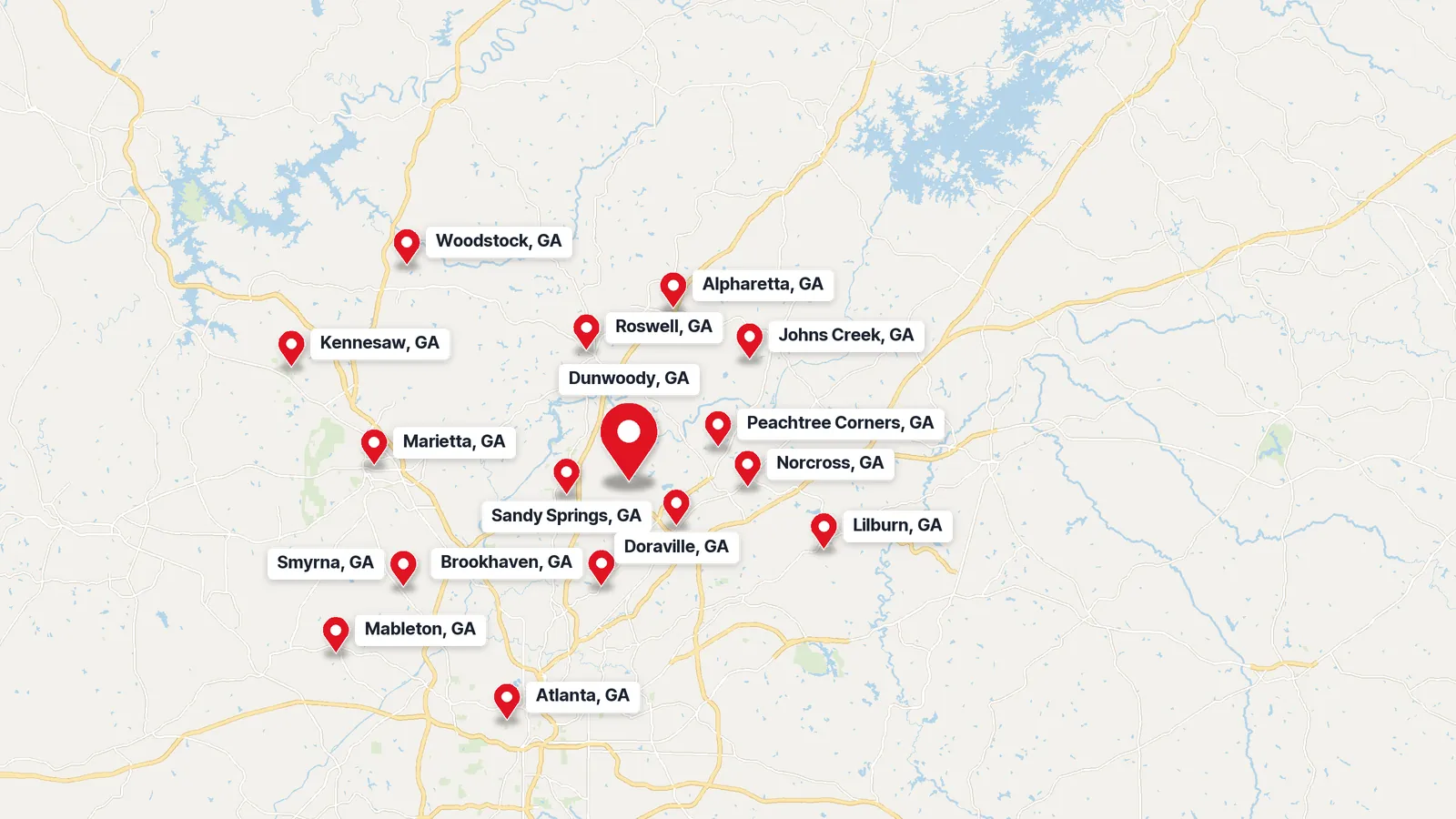
Serving Dunwoody, GA
Mold and Water Damage Help for Dunwoody Homes and Rentals
Tell us what you're seeing in your Dunwoody home and we'll talk you through the next step.
Helping Dunwoody Owners Dry Out and Clear Mold
If you've found mold, a musty smell or water where it shouldn't be, we can help you sort out what's going on and fix it. Woodstock Mold Remediation handles mold remediation, water damage restoration, odor removal and air purification, dehumidification and structural drying, carpet and flooring replacement, and painting and refinishing. That means one team can take you from the wet or moldy problem to a finished room, so you aren't juggling several companies while your home is torn up.
We work out of Woodstock and drive down to Dunwoody, about 16 miles away, so you'll get a plain explanation of what we find and what the work involves before anything starts. Whether you own a brick ranch in a tree-lined subdivision or rent an apartment near Perimeter Center, the first step is the same. Contact us with your location and what you're seeing, and we'll go from there.
What to Keep in Mind Before Work Starts
Permits come from the City of Dunwoody
The city's Community Development office handles permits and inspections, and many renovations need one, especially structural, plumbing, electrical and HVAC work. Rebuilding after mold or water damage can fall into that. Check the City of Dunwoody permits and inspections page for what your repair needs.
Older homes hide moisture
Much of the single-family housing here dates from the 1960s to the 1980s, and many homes have basements or crawlspaces. Those spaces collect ground moisture and condensation, so a problem can build for months before you smell it. We look at the whole moisture path, not only the stain you can see.
Storms and creeks affect drainage
Spring thunderstorms, straight-line winds and tropical remnants can bring heavy rain, and creeks cross the city. Water can end up in basements or crawlspaces even when the roof is sound. Stream buffers of 75 feet also limit digging and tree removal near waterways, which can limit drainage fixes.
Tree rules and HOA approval
Falling limbs are a common cause of roof leaks, and Dunwoody has a Tree Preservation ordinance that can require permits for removing certain trees. Many subdivisions also have HOAs or civic associations. Check your covenants before exterior repairs or repainting, since rules vary from one neighborhood to the next.
Apartments, condos and renters
Dunwoody has a large stock of apartments and condos, especially around Perimeter Center and Georgetown. If you rent, put a leak or mold problem in writing to your landlord, since Georgia law makes landlords responsible for keeping rentals in repair. Condo owners should also check with their association before work starts.
How We Handle Mold and Water Work Here
Mold remediation is the heart of what we do, and in Dunwoody it often starts in the places you don't look every day: a damp crawlspace, a basement corner or the back of a closet on an outside wall. We find the moisture feeding the growth, contain the area and remove what's affected. Odor removal and air purification go along with it, because a musty smell and airborne spores usually linger after the visible mold is gone.
Water damage restoration and dehumidification and structural drying matter just as much in a humid subtropical place like this. Summer thunderstorms, heavy remnants of tropical storms and a leaky roof or supply line can soak drywall, insulation and framing quickly. We pull out standing water, dry the structure with dehumidifiers and air movers, and check moisture levels so you aren't sealing damp materials behind new walls, where mold tends to return.
Once the home is dry and clean, we can replace carpet and flooring and handle painting and refinishing so the room looks like itself again. That's useful in the 1960s through 1980s houses common here, where an old carpet over a damp slab or crawlspace floor may need to go entirely. It's also handy in apartments and condos, where one finished repair keeps you from coordinating several trades.
Getting to Know Dunwoody
Dunwoody was first settled in the early 1830s and takes its name from Major Charles Dunwody, who lived from 1828 to 1905. The extra "o" in today's spelling is reported to come from a misspelling of his name on a banking note. For most of its history the area was unincorporated DeKalb County, and it became its own city on December 1, 2008, after a local cityhood movement. You can read the full story in Wikipedia's Dunwoody article.
Today Dunwoody is a suburban city of 51,683 people (2020 Census) just north of Atlanta, and most of it is quiet, tree-lined subdivisions. Dense offices, hotels and high-rise apartments gather at the Perimeter Center edge, where the Dunwoody MARTA station on the Red Line sits, and you can learn about the business community through the Greater Perimeter Chamber. Dunwoody Village adds shops and restaurants, and creeks run through the city, which is why it has a 75-foot stream buffer rule.
How Dunwoody's Homes Shape the Work
Most of Dunwoody's single-family homes went up during the 1960s through 1980s suburban boom. You'll see brick-and-siding ranches, split-levels and two-story traditionals, many with basements or crawlspaces and asphalt shingle roofs. At that age, aging plumbing, worn roof flashing and older HVAC systems are common sources of moisture. Crawlspaces and lower levels also tend to stay damp, so mold work here often means fixing the source as well as cleaning.
Teardowns and rebuilds are common on single-family lots, so newer, larger houses sit beside original ones. Newer homes are tighter, and trapped humidity can cause trouble if a leak goes unnoticed. Around Perimeter Center and Georgetown, apartments and condos mean shared walls, ceilings and plumbing, so water from one unit can reach another. In those buildings we pay close attention to where the water traveled and who needs to be told.
Woodstock Mold Remediation in Dunwoody, GA
We find the moisture source first
Mold comes back when the wet cause stays put, so we trace leaks, humidity and drainage before cleaning. In Dunwoody's older crawlspaces and basements, that step often decides whether the repair lasts.
One team from drying to paint
Because we also handle drying, flooring and painting, you deal with one crew from the first visit to the finished room. That keeps the handoffs simple while you're living through the repair.
Get Your Free Estimate in Dunwoody, GA
Contact us with your Dunwoody address and a few details about the damage, and we'll explain the next steps in plain terms.
Questions From Dunwoody, GA
Do I need a permit for mold or water damage repairs in Dunwoody?
It depends on the work. The City of Dunwoody says many renovations need a permit, especially structural, plumbing, electrical and HVAC work, so a rebuild after water damage may qualify. Whether cleanup alone needs one isn't something we'd guess at. Contact the city's Community Development office with your plans, and we'll work with what it tells you.
Why do Dunwoody basements and crawlspaces get damp after storms?
Our summers are hot and humid, and spring storms and tropical remnants can drop a lot of rain quickly. Creeks cross the city, and many 1960s to 1980s homes have crawlspaces or basements that collect ground moisture and condensation. When gutters, grading or drainage can't keep up, water finds its way in and the space stays damp long enough for mold to start.
I rent near Perimeter Center. Who handles mold in my apartment?
Georgia law makes landlords responsible for keeping rental homes in repair, and leaks and plumbing or HVAC failures are part of that. Report the problem in writing and keep copies and photos. Talk with your landlord or property manager before arranging any work yourself, and get legal advice before withholding rent. We can inspect and explain the damage once the property owner agrees.