Smyrna, GA Mold and Water Damage Help
Mold Remediation and Water Damage Repair in Smyrna, GA
Tell us what you're seeing in your Smyrna home and we'll talk through the next step with you.
Helping Smyrna Homes Recover From Mold and Water
If you've found a musty smell, a stained ceiling or a patch of mold in your Smyrna home, we can help you sort out what's going on and get it fixed. Woodstock Mold Remediation handles mold remediation, water damage restoration, odor removal and air purification, dehumidification and structural drying, carpet and flooring replacement, and painting and refinishing, so one team can take you from the wet or moldy problem all the way to a finished room.
Smyrna sits right by the I-285 and I-75 interchange, and your place might be a single-family house, a townhome or an apartment. Each one dries and rebuilds a little differently, so we start by learning what happened, where the water came from and what it reached. Then we explain the plan in plain words before work begins. Tell us which part of Smyrna you're in and what you're seeing, and get your free estimate.
Where We Work Around Smyrna
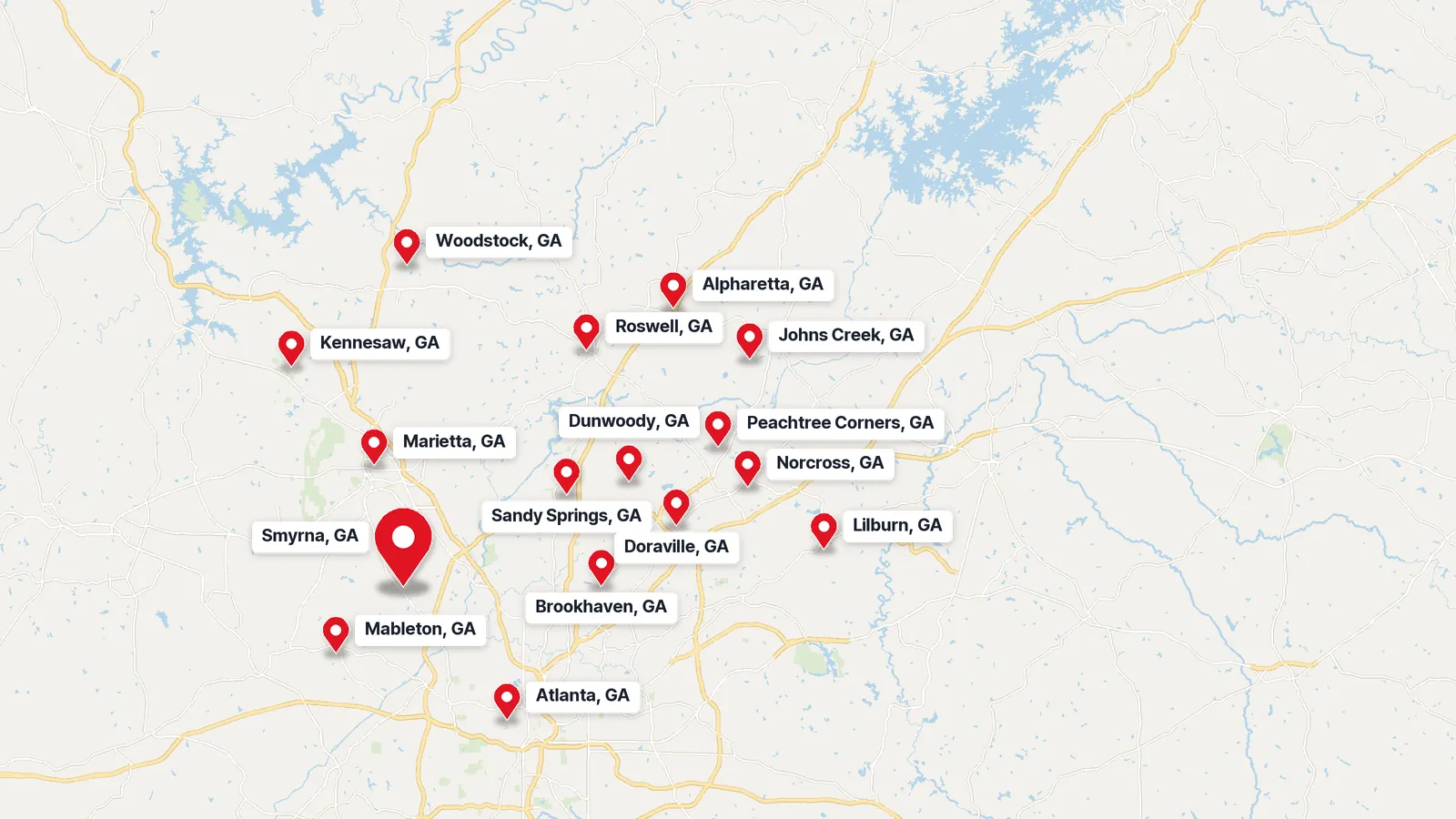
We travel from Woodstock to homes all over Smyrna, including these well-known parts of town.
Market Village and downtown
Newer townhomes and mixed-use buildings sit beside older homes near King Street, so jobs here can range from shared walls to older framing. See the Cobb Chamber of Commerce for local business.
Heritage at Vinings
Single-family detached homes with a pool, tennis courts and a clubhouse, close to Market Village, where a slow leak in a finished space can go unnoticed.
Oak Hills
A neighborhood by Heritage Park with oaks, rolling hills and sidewalks, where shade and leaf debris can keep gutters and roof edges damp.
Vinings Glen, Vinings Pointe and Vinings Estates
These Vinings-named areas sit on the southeast side toward the river and Sandy Springs, where humidity and lower ground can matter for basements and crawlspaces.
Rose Garden Hills
One of several named neighborhoods, along with Cheney Woods and Forest Hills, that are listed as mostly single-family and often older suburban stock.
What To Do Before We Arrive
Stop the water, then look around
If you can safely shut off the water at the valve or fix an obvious drip, do it. Then check the ceiling below, closets and the wall behind the leak, because wet spots often show up away from the source.
Dry what you safely can
After a storm or a leak, open windows when it's dry outside and run fans on wet surfaces. In Smyrna's humid summers, wet materials can start growing mold within a couple of days, so don't wait.
Don't paint or scrub over it
Skip painting over stains and don't scrub or spray mold with a lot of force, because that can spread spores. Take photos, note when it started, and leave the damaged area as it is for us to look at.
What Each Service Means for Smyrna Homes
Mold remediation and water damage restoration usually go together here, because humid Georgia summers and heavy storms mean a small leak can turn into mold fast, especially in crawlspaces, attics and tucked-away corners of older houses. We handle dehumidification and structural drying to get moisture out of framing and subfloors, odor removal and air purification once the source is dealt with, and carpet and flooring replacement and painting and refinishing to put the room back together, whether it's a ranch house, a townhome or an apartment.
How Smyrna's Homes Shape the Job
Much of Smyrna's housing is single-family, and a good share of it is older suburban stock. That's helpful to know, because older houses often have crawlspaces, limited ventilation and aging plumbing, HVAC and roofing, all of which are common places for moisture to hide. We can't tell you a house's age before we see it, but we look closely at those spots because mold often grows out of sight before you smell or see it.
Redevelopment has also added thousands of new homes, mostly cluster homes, townhouses and condo communities, and apartments are common too. Shared walls and shared plumbing mean a leak next door can reach you, so we trace where moisture traveled before we dry anything. If you rent, we can document the damage and cleanup so you have clear notes to share with your landlord.
Getting to Know Smyrna
Smyrna has a longer story than most suburbs around Atlanta. Pioneers began settling the area in 1832, and before it became Smyrna it went by several names, including Varner's Station, Ruff's Siding, Neal Dow and Ruff's Station. The city was incorporated in 1872 and took its name from the biblical city of Smyrna, now İzmir in Turkey. You can read more of that history in the Smyrna, Georgia article on Wikipedia.
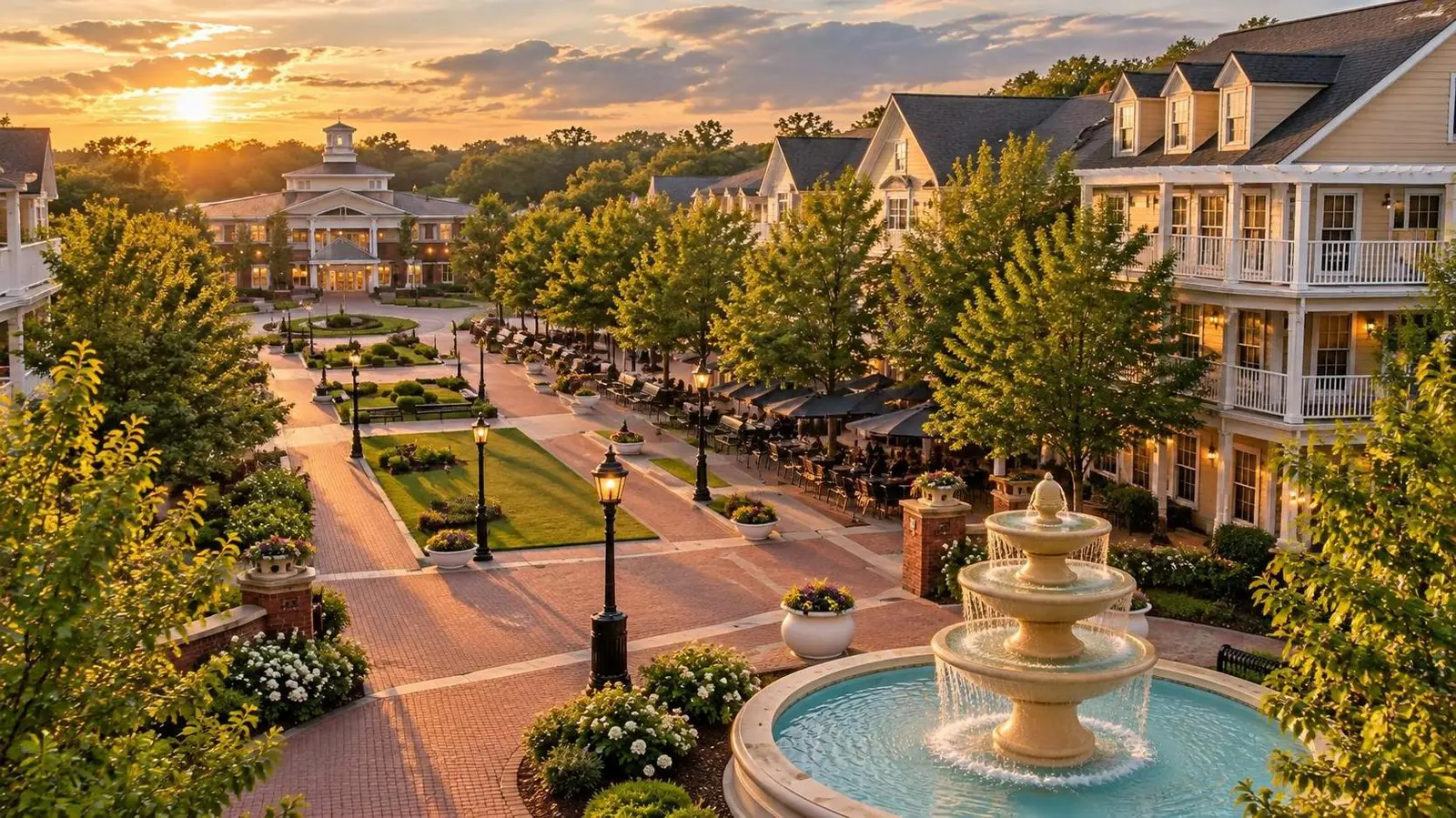
If you've lived here a while, you know Smyrna as the Jonquil City, named for the flowers that come up every spring. Downtown, Market Village was begun as a redevelopment in 1991 and is styled like an old-time village square, with fountains and antique street lamps. It hosts festivals and concerts, and it's the civic and dining heart of town, centered around King Street and not far from Smyrna City Hall.
The city covers about 15.6 square miles in Cobb County, roughly a mile northwest of Atlanta's city limits, and it neighbors Vinings, Cumberland, Mableton and the area around Truist Park. The 2020 Census counted 55,663 residents. History runs deep here too, because two Civil War engagements took place nearby on July 4, 1864, and that's part of how people in town think about the place.
Day to day, Smyrna feels like a mostly residential suburb with a walkable downtown, busy commercial corridors and some distribution and light industrial buildings tucked in. Heritage Park and the Silver Comet Trail give people green space, and the Chattahoochee River runs close to the southeast side. That mix of trees, creeks and warm, humid weather is also why moisture is something Smyrna owners have to keep an eye on.
Ask for a Free Estimate in Smyrna, GA
Send us your Smyrna address and a quick description of the problem, and we'll talk through what to do next.
Questions From Smyrna, GA
Does Georgia require a license to remove mold in Smyrna?
Georgia has no state license specific to mold remediation, but rebuilding work above the contractor-license threshold falls under the State Licensing Board for Residential and General Contractors. Ask any company for its credentials and a written scope separating mold work from the rebuild. If something goes wrong, you can file a complaint with the Georgia Attorney General's Consumer Protection Division.
Do I need a permit to fix mold damage in Smyrna?
Mold removal alone may not need one, but rebuilding with electrical, plumbing, HVAC or structural work usually does. Smyrna's community development function handles permits and inspections, though the exact department name is best checked on the city's website. Call them before you start so you know what applies to your repair, and we'll work with whatever they tell you.
I rent an apartment in Smyrna and there's mold. What should I do?
Put the problem in writing to your landlord and keep photos and dates. Georgia law makes landlords responsible for keeping rental premises in repair, and leases signed or renewed on or after July 1, 2024 carry an express duty of habitability. The law doesn't name mold, so get legal advice before withholding rent or fixing it yourself.
How fast does mold grow after a Smyrna storm?
Restoration sources commonly say mold can start within about 48 to 72 hours of water exposure, and our humid metro Atlanta summers don't slow it down. After heavy rain, wind-driven water or a failed gutter, check ceilings, attics and walls early. The sooner wet materials are dried out, the better your chances of keeping things small.
Is a crawlspace or older house in Smyrna more likely to have mold?
It can be. Older homes often have less ventilation, and crawlspaces and attics collect humid air that condenses on cooler surfaces. We can't say a particular house has a problem without looking, but musty smells, stains or damp insulation are worth a call. Structural drying and dehumidification help once the moisture source is fixed.
Will my homeowners insurance cover mold from a leak?
It depends on your policy. Mold from a sudden covered water loss is often treated differently from long-term seepage, so read your policy wording closely and document the damage with photos before cleanup. We can describe what we find and what work is needed, which can help when you talk to your insurer.