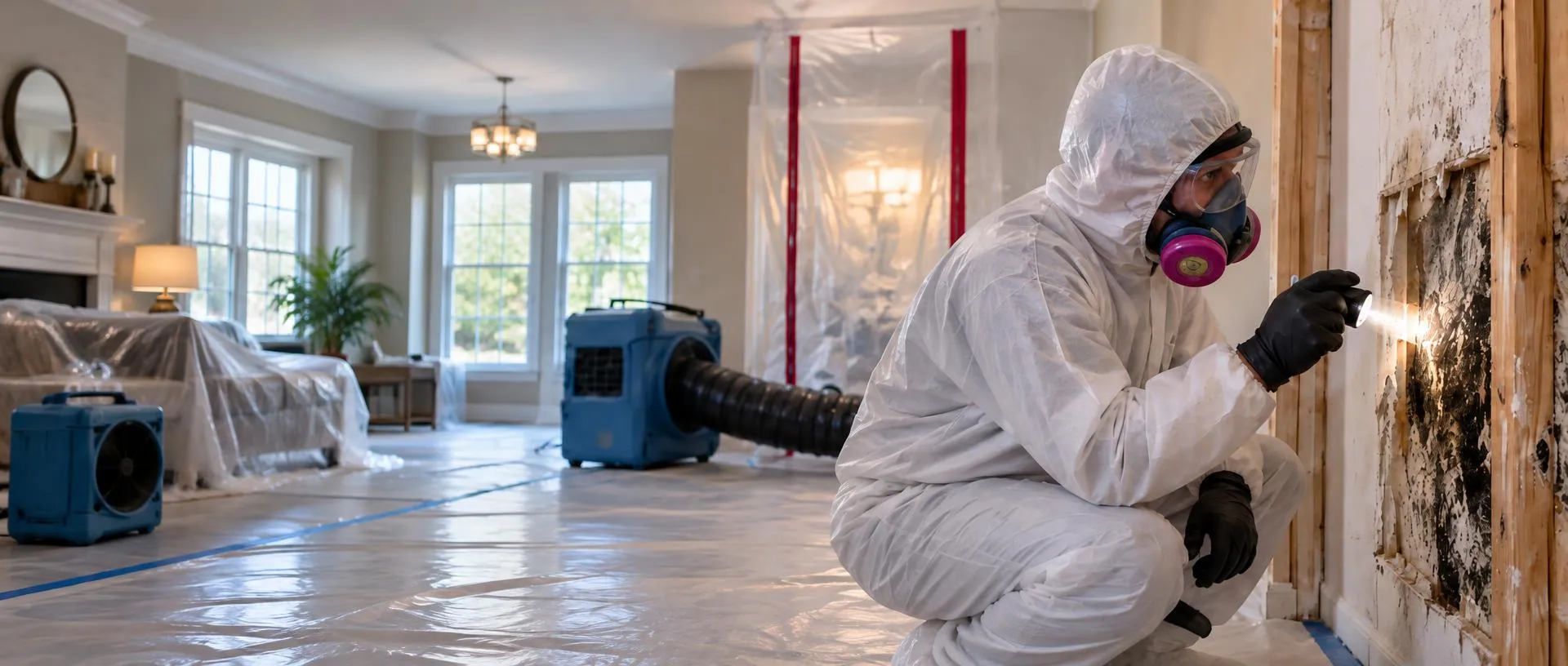
Dehumidification and structural drying in Woodstock, GA
How Structural Drying Pulls Moisture Out of Your Home
Tell us what got wet and we'll help you plan how to dry it out.
What Structural Drying Is and Why It Matters
Structural drying means taking moisture out of the materials your house is built from, like framing, subfloor, drywall, concrete and insulation. It isn't the same as wiping up a spill or running a fan. Wet materials can look and feel dry on the surface while holding water deep inside, and that hidden water is what causes swelling, warping and mold. So the goal is to bring each material back to where it was before the water got in.
Here in Woodstock the air is already humid for much of the year, and that makes wet materials slow to dry on their own. Mold can start growing within about 24 to 48 hours of a material getting wet, so waiting and hoping rarely works. If you've had a leak, a storm or a flooded crawl space, get your free estimate and we'll look at what's wet and what it needs to dry properly.
Woodstock Mold Remediation Is Proud to Serve Woodstock
What Structural Drying Includes
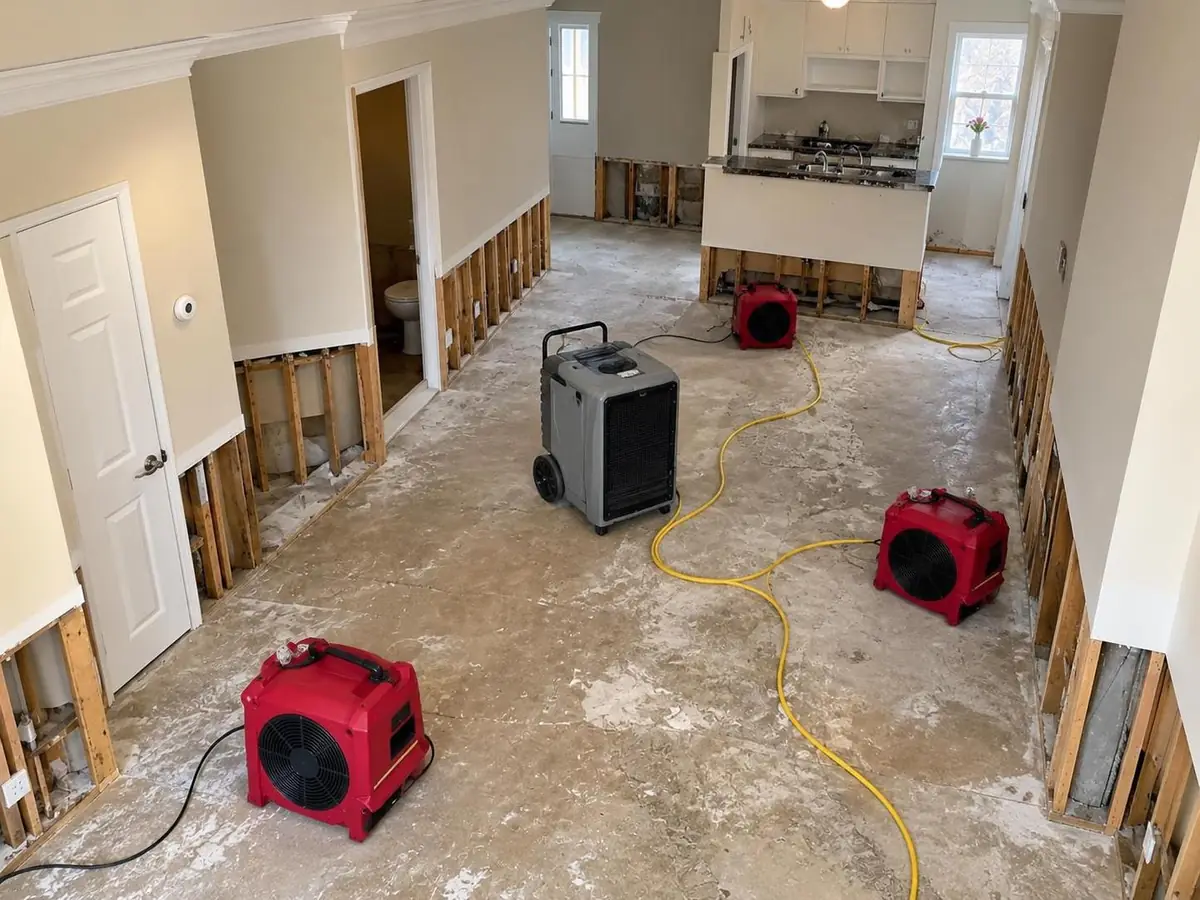
A proper drying job is more than setting a few fans on the floor. It's a planned setup sized to how much water got in and which materials took it on, and it's checked every day. Here's what goes into it, so you know what you're paying for and what to expect in your home.
Moisture mapping
We use moisture meters and thermal imaging to find where water has traveled, including behind walls and under floors. That shows us the real size of the wet area, which is often bigger than what you can see.
Equipment sizing and placement
Dehumidifiers, air movers and sometimes air scrubbers get placed based on the size of the space and how wet it is. Too little equipment drags the job out, and poor placement leaves pockets of damp air.
LGR dehumidification
Most homes are dried with low grain refrigerant dehumidifiers, which keep pulling moisture even when the air is already fairly dry. For hardwood, concrete or plaster, desiccant units may do a better job.
Air movement
High-volume air movers push air across wet surfaces so moisture can evaporate, then carry that humid air to the dehumidifiers. Moving air and removing moisture work together, and one without the other falls short.
Daily monitoring
We track humidity, temperature and the moisture content of the materials each day. Those numbers tell us whether the drying is working, and they let us move or remove equipment as areas dry out.
Records of the drying
Daily moisture readings, equipment logs and drying goals are written down. If you're working with your insurer, carriers generally want that paper trail, and it also shows you the job is progressing.
Typical range (national)
| Project type | What it typically involves | Typical range (national) |
|---|---|---|
| Typical drying job | Drying a few rooms with dehumidifiers and air movers, plus monitoring | $1,000 to $6,000 |
| Equipment rental | Dehumidifiers and air movers needed for the drying period | $300 to $2,000 |
| Moisture assessment | Meter and imaging checks to find how far moisture has spread | $150 to $600 |
| Drying and remediation, per square foot | Drying work priced by the area affected | $0.50 to $2.50 |
These are typical published ranges from home cost guides, not a quote. What you'd actually pay depends on what the inspection finds, such as how many rooms are wet, how long they've been wet and which materials are involved. See our full cost guide →
How Drying Fits With Our Other Work
Drying rarely stands alone. After a leak or flood it's a core part of Water Damage Restoration, and if growth has already started it goes hand in hand with Mold Remediation. Odor removal and air purification can follow once the moisture is under control, and if wet carpet, flooring or drywall had to come out, Carpet/flooring Replacement and Painting and refinishing finish the job. Tell us where you are in that sequence and we'll help you put the steps in order.
What We Check First
Before any equipment goes in, we walk the affected area and measure. Moisture meters and thermal imaging show us where the water went, and we look at the materials involved, because drywall, wood framing, insulation, carpet padding and concrete all hold and release water differently. We also ask when the water arrived and where it came from, since a job that's been wet for days looks different from one caught the same afternoon.
What we find shapes the plan and the estimate. The IICRC S500 standard sorts drying jobs into four classes based on how far the water spread and how stubborn the materials are, and that's a useful way to think about size. A small, single-room job needs far less equipment than wet cavities across a whole floor. Once we know the scope, we explain the equipment, the likely number of days and what could change the cost.
Getting Your Home Ready
Clear a path
Move small furniture, rugs and anything on the floor out of the wet area if it's safe to do so, and give us a clear way from the door to the room. Leave heavy items where they are.
Protect pets and people
Keep pets and young children out of the drying area, because there are cords, hot air and moving fans. If someone has breathing problems, tell us before we start so we can plan around it.
Leave the equipment alone
Please don't unplug, move or switch off the machines, even when they get loud. They only work when they run continuously and are placed where we put them. Call us if something seems wrong.
Get Your Free Estimate Today
If something in your home got wet, tell us what happened and we'll help you work out the next step.
Why Choose Us for Dehumidification / structural drying?
Drying is measured, not guessed
We go by meter readings and humidity data, not by how a wall feels. A surface can feel dry while the framing behind it is still wet, and readings are how you tell the difference.
Equipment matches the job
We size the number of dehumidifiers and air movers to the rooms and materials involved. That keeps small jobs from being over-equipped and big jobs from drying too slowly while mold gets a head start.
We understand mold risk
Because mold remediation is our main work, we know how quickly damp materials can turn into a mold problem. If we see growth while drying, we can tell you right away and explain next steps.
Records you can use
Daily readings and equipment logs are kept, so you can see progress and share them with your insurer if you need to. You won't have to take our word for when the job is done.
The cause gets attention too
Drying a house while a leak keeps feeding it only buys time. We'll point out the likely source of the water so you can get it fixed and the drying actually lasts.
How Long Drying Usually Takes
How long it takes depends on how much water got in and what it soaked. A small area may dry in a couple of days, while several wet rooms often take longer, and dense materials like hardwood, concrete and plaster can need a week or more. We can't promise a number up front, because the readings decide when it's done, not the calendar. We'll tell you what we expect after the first look and update you as the numbers come in.
Most of the time you can stay in your home. The affected rooms will be busy with equipment and you'll want to keep them clear, and the machines are loud and run around the clock, so plan for some noise at night. You'll also see extra cords and plenty of warm air. Tell us about any sleeping or working spaces that matter to you and we'll work around them where we can.
After the Equipment Leaves
Once the readings show the materials are dry, we remove the equipment and go over the final numbers with you, so you know what dry looks like for each area. Dry materials are the point where repairs can safely start, whether that's drywall, flooring or paint. If anything was taken out during the job, we'll talk through what comes next and how it ties into the rest of the work.
For the next few weeks, keep an eye out for the things that mean moisture is still around: a musty smell, new stains or discoloration on walls or ceilings, paint that bubbles or peels, floors that cup or lift, and baseboards that feel damp. If you notice any of those, call us rather than waiting, because early action is far easier.
To keep the problem from coming back, fix whatever let the water in, whether that's a roof, a pipe, a drain line or a drainage problem outside. Then keep indoor humidity roughly between 30 and 50 percent, run bathroom and kitchen fans, and use a dehumidifier in damp spots like basements and crawl spaces. A cheap humidity monitor makes it easy to watch.
Dehumidification / structural drying Questions
Why not just rent a dehumidifier from a hardware store?
Portable consumer units lose effectiveness once the air gets below about 60 percent humidity, and building materials need the air much drier than that to give up their moisture. Commercial low grain refrigerant units keep pulling water at low humidity. They're also sized and placed with airflow in mind. A single store-bought unit usually dries the air in the room while the framing and subfloor stay damp, which is where mold tends to start.
How do you know when my home is dry?
We rely on moisture meter readings and humidity and temperature data, not on how a surface looks or feels. Each material has a target, which is its normal moisture level before the water event, and wood is commonly considered dry at or below roughly 19 percent. We take readings every day, and drying stops only when the numbers reach those targets. We'll share the final readings with you so you can see for yourself.
Will mold grow while my home is drying?
If drying starts within about 24 to 48 hours and is done thoroughly with the right equipment, mold is unlikely. Waiting longer than 48 hours raises the risk significantly, even with machines running, because damp materials give mold what it needs. If we find growth during the job, we'll tell you right away and explain what it means for the plan, since that may call for mold remediation alongside the drying.
Can I stay home while the equipment runs?
Usually, yes. The machines run around the clock, so expect noise, extra warmth and cords in the affected rooms, and you'll need to keep those rooms clear. Keep children and pets away from the equipment and don't switch anything off. If anyone in your household has asthma or other breathing problems, tell us before we start so we can plan around it and, if needed, talk through whether staying elsewhere makes sense.
Will my insurance cover drying, and what paperwork do I need?
That depends on your policy and on what caused the water, and sudden losses are often treated differently from slow leaks. Carriers generally want daily moisture readings, humidity data and equipment logs to approve drying charges, and we keep those records as part of the job. Take photos of the damage before work starts and contact your insurer early. If a claim is mishandled, the Georgia Department of Insurance takes complaints.
How a Drying Job Runs
You tell us what happened
Contact us and describe the water, when it started and what got wet. The sooner we hear, the better the odds of drying things before mold takes hold.
We measure and map
We check materials with moisture meters and thermal imaging, find where the water traveled and work out how big the drying job is. Then we explain the plan and give you an estimate.
We set up the equipment
Dehumidifiers, air movers and, where needed, air scrubbers go in and are placed to move air across the wet materials. We show you what's running and what to leave alone.
We check readings every day
Each day we record humidity, temperature and material moisture, then adjust or move equipment as areas dry. Wet spots that stall get a closer look.
We confirm it's dry and follow up
When the materials reach their target moisture levels, we pull the equipment and go over the final readings with you. We also point out anything to watch afterward.