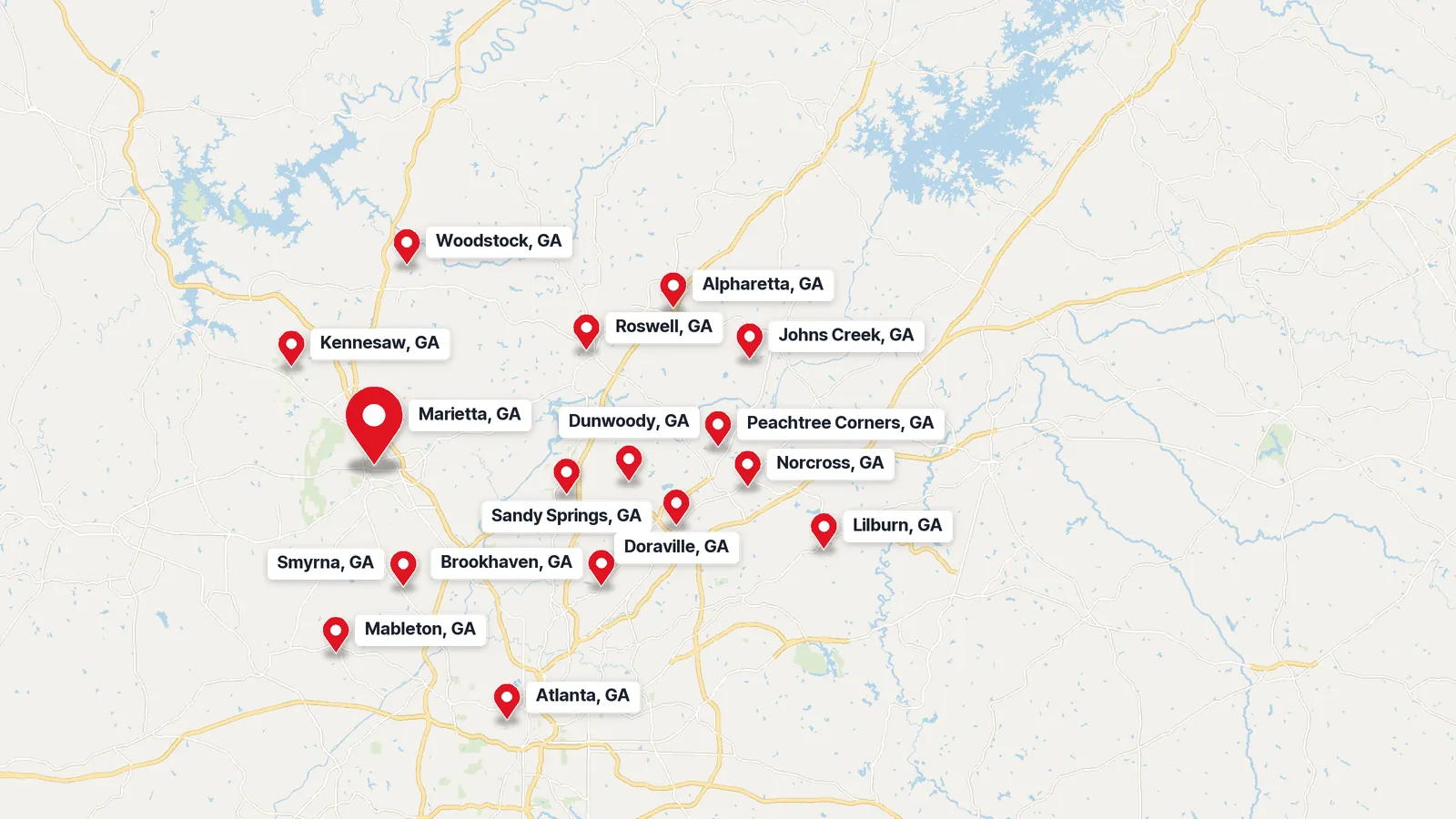
Marietta, GA Service Area
Mold Remediation and Water Damage Help in Marietta, GA
Tell us what you're finding in your Marietta home, and we'll help you sort out the next step.
Getting Marietta Homes Dry and Mold-Free
If you've found a musty smell, a stain spreading across a ceiling or a damp crawlspace in Marietta, we can help you deal with it. Woodstock Mold Remediation handles mold remediation, water damage restoration, odor removal and air purification, and dehumidification and structural drying. Because the work often doesn't stop at cleanup, we also do carpet and flooring replacement and painting and refinishing, so one team can take your home from wet and worrying back to a finished room.
Marietta is about 10 miles from our Woodstock base, and the drive usually takes roughly 25 to 35 minutes. Your house might be a brick ranch from the 1970s or a century-old place near the Square, and each one holds moisture in its own way, so we look at how yours was built before we plan anything. Contact us with your location in Marietta and a few details about what you're seeing, and we'll take it from there.
What to Keep in Mind Before Work Starts
Red clay holds water
Georgia red clay drains slowly and can shift, so after a heavy rain water tends to linger against foundations and in crawlspaces and basements. That's often the hidden source behind a musty smell, and fixing it matters as much as cleaning the mold.
Permits depend on your address
Rebuild work with electrical, plumbing, HVAC or structural changes may need permits, and the right office depends on where you live. Inside the city, that's the City of Marietta Building Inspections. Unincorporated Cobb, including parts of East Cobb, goes through the county.
Historic districts and HOAs
The Marietta Historic District has design review for exterior changes, and many subdivisions have HOA covenants. Interior mold work is usually less affected, but exterior paint, roofing or siding repairs may need approval first, so check before you commit.
Storms and trees make leaks
Spring severe weather, summer downpours and the occasional ice storm bring wind and falling limbs, and Marietta has plenty of mature trees. A damaged roof or overflowing gutter can send water into an attic or wall and set up mold.
Licensing for the rebuild
Georgia doesn't license mold remediation itself, but rebuilding work above a set dollar amount needs a licensed residential or general contractor. Feel free to ask any company for its license number and for a written scope that separates cleanup from rebuilding.
How Our Services Fit Marietta Homes
Mold remediation, water damage restoration and dehumidification and structural drying go hand in hand here, because Marietta's humid summers and frequent thunderstorms keep moisture close. Many homes sit on hilly lots with basements or crawlspaces, and those are the places where damp air and slow-draining red clay quietly feed mold. We find where the water is coming from, dry out the framing and subfloor, and deal with the mold so it has less reason to come back.
Once the damp is under control, we handle odor removal and air purification so your home smells like home again, and we do carpet and flooring replacement and painting and refinishing to finish the job. That matters in a town with so many 1960s to 1980s ranches and split-levels, where old carpet and drywall often take the worst of a leak. You get the cleanup and the rebuild planned together, and we can write the mold work and the rebuild up as separate pieces so you can see each one.
Where We Work in Marietta
We serve homes and buildings all over Marietta, and here are some of the areas you'll hear about most, along with what the buildings tend to be like.
Marietta Square and Downtown
The historic core has commercial buildings and homes more than a century old, where aging materials and limited ventilation can hide slow leaks.
Historic districts
Church Street, Fort Hill, Kennesaw Avenue and the Washington Avenue area have Victorian and early-1900s houses, and exterior changes face design review.
Whitlock Heights
Close to downtown, this area has 1920s to 1960s homes with mature trees, so gutters, roofs and older plumbing are common trouble spots.
Lee's Crossing
Houses here were mostly built in the 1960s through the 1980s, a stretch of ranches and split-levels where crawlspaces and older carpet are common.
Kennesaw Mountain area
Neighborhoods near the battlefield sit on hilly lots, which often means basements and crawlspaces where runoff and humidity can collect.
East Cobb
This well-known area has 1970s to 1990s subdivisions, and some parts are inside Marietta while others are unincorporated, so the address matters for permits.
Powers Ferry and Marietta Parkway corridors
You'll find apartments, townhomes and mid-century houses along these roads, so a leak may involve a neighbor's unit or a landlord.
Cobb Parkway corridor
Near the Big Chicken, this strip of US-41 is mostly car dealers and retail, with small commercial buildings that can need water and mold help too.
Getting to Know Marietta
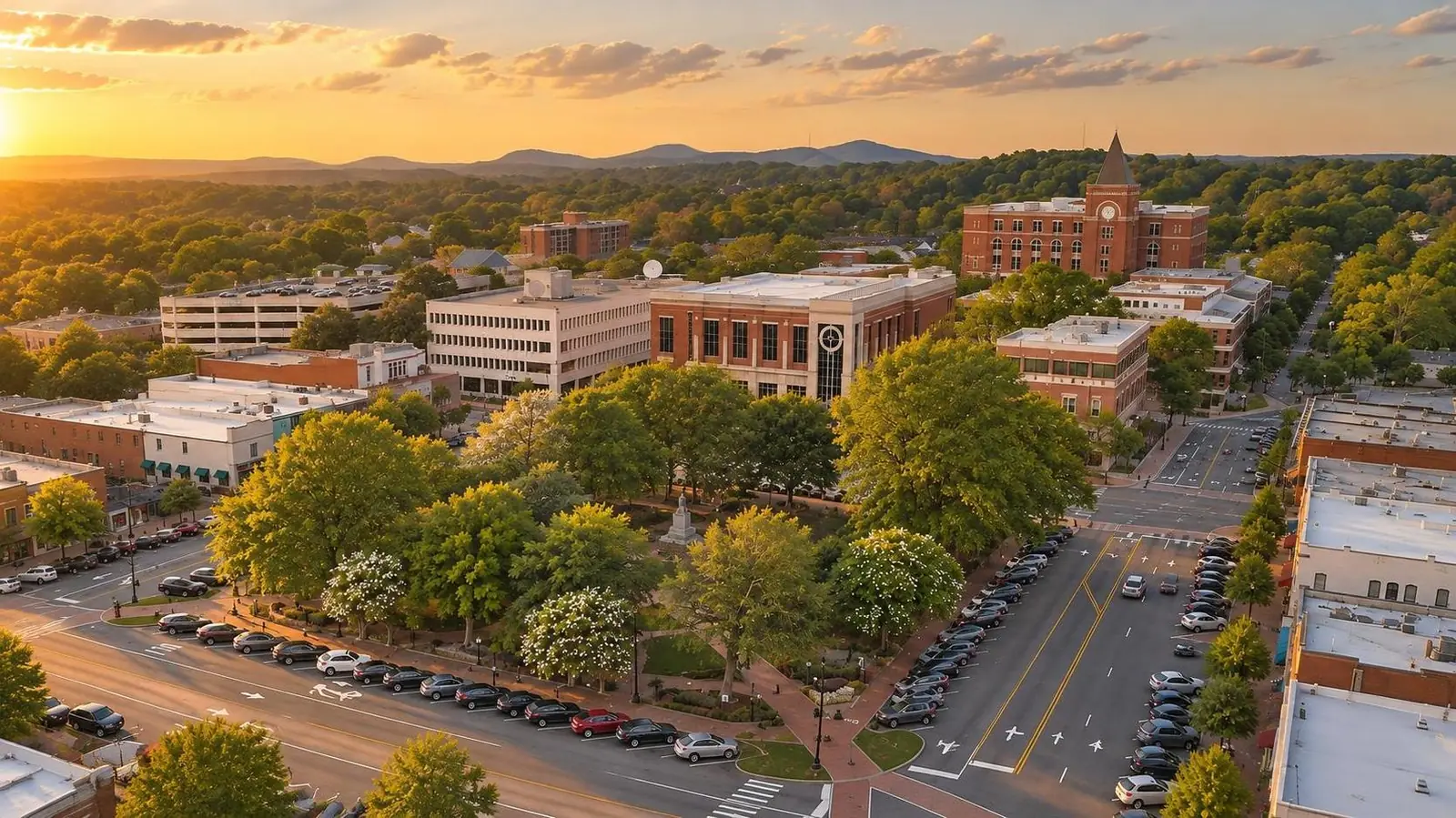
Marietta is the seat of Cobb County, about 20 miles northwest of downtown Atlanta, and its story starts in the early 1830s. Cobb County was carved out of Cherokee lands in 1832, and the Georgia General Assembly designated Marietta as the county seat in 1834. The town is generally said to be named for Mary Cobb, wife of Thomas W. Cobb, a US senator and judge. You can read more of the background on Marietta's Wikipedia page, and it helps explain why so many buildings here are old.
The town grew up around its central square and the Western & Atlantic Railroad, and the 1864 Battle of Kennesaw Mountain was fought just west of it. Today Marietta Square is full of restaurants, shops and offices, with Glover Park and the Earl Smith Strand Theatre close by. Kennesaw Mountain National Battlefield Park is a short ride away, and out on Cobb Parkway the Big Chicken is the landmark folks use when they're giving directions.
Marietta is a mostly built-out inner-ring suburb, so growth comes from infill, townhomes and redevelopment more than from brand-new subdivisions. It sits next to Smyrna, Kennesaw, Roswell and unincorporated east and west Cobb, and big local employers include the Lockheed Martin plant, Dobbins Air Reserve Base and Wellstar Kennestone Hospital. For you, that mix of old and newer buildings, plus hot, humid summers and rain all year, is why moisture is a steady worry in local homes.
What Marietta's Homes Mean for the Work
Marietta's housing is a real mix, from downtown buildings over a hundred years old to brick and siding ranches, split-levels and two-story traditionals from the 1960s through the 1980s, plus newer infill townhomes and plenty of apartments. Older houses often have crawlspaces or basements, and some have slab floors, while most roofs are asphalt shingle. That means we pay close attention to ground moisture, attic ventilation and old plumbing, and in apartments and rentals we plan around shared walls and ceilings.
Free Estimates in Marietta, GA
Send us your Marietta address and a few notes about what you're seeing, and we'll talk through what comes next.
Questions From Marietta, GA
Does Georgia require a license to remove mold in Marietta?
Georgia doesn't license mold remediation itself. Rebuilding work, like replacing drywall or flooring above a certain dollar amount, falls under the State Licensing Board for Residential and General Contractors. You can ask any company for its license number, and ask about voluntary industry training too. A written scope that separates the mold work from the rebuild makes it easy to see what you're paying for.
Who issues permits for repairs after water damage in Marietta?
It depends on where your house sits. Inside Marietta city limits, the city's Building Inspections division handles permits for rebuild work such as electrical, plumbing, HVAC and structural repairs. Unincorporated Cobb, including some East Cobb addresses, goes through the county's Building Department. If you're not sure, call the city first with your address, because they can tell you which office applies and what counts as an ordinary repair.
Will my homeowners insurance cover mold in Marietta?
It depends on your policy. Mold that follows a covered sudden water loss is often treated differently from mold caused by long-term seepage, but the wording of your policy decides. Read it closely and photograph the damage before anything is moved. If a claim is mishandled, you can file a complaint with the Georgia Department of Insurance.
I rent an apartment in Marietta and my landlord won't fix a leak. What can I do?
Georgia law makes landlords responsible for keeping rental premises in repair, and the Safe at Home Act added a duty of habitability for leases signed or renewed on or after July 1, 2024. The law doesn't name mold, so put the problem in writing and keep copies and photos. Get legal advice before withholding rent or paying for repairs yourself.